Keynote Speakers
Gemma Bridgman
Principal Sustainability Strategist, Forum for the Future

Gemma works with businesses across sectors to develop transformational sustainability and governance strategies. Since joining Forum, she has worked on projects covering food (Bord Bia, Dole, Glanbia, The Co-op), technology (Capgemini), insurance (Aviva), global retail, and climate and health (Bupa, Reckitt), and land ownership (The Crown Estate), as well as leading thought pieces such as Business Transformation Compass 2.0 with The Bentley Foundation. Gemma’s background spans 15 years in sustainability industry and NGO roles. She draws on her experience of working on the USLP and Unilever Compass at Unilever to tackle practical considerations that can be addressed in sustainability strategy design.
Unlocking value creation: the untapped potential of a just and regenerative mindset
This lecture will unpack the concept of a just and regenerative mindset, and explore how the mindsets we adopt can either limit or create potential by default. We will then explore what the just and regenerative mindset can look like in action and how it has better enabled some international and global companies across a range of sectors to both drive progress across some of the societal and environmental issues we’re currently facing through creating multiple forms of value.
Gordana Vunjak Novaković
Columbia University

Gordana Vunjak-Novaković is University Professor, as the first engineer to ever hold this highest academic rank at Columbia University. She is also the Mikati Foundation Professor of Biomedical Engineering, Medical Sciences and Dental Medicine. The focus of her lab is on engineering human tissues for regenerative medicine and “organs-on-chip” models of disease. She is broadly published and highly cited, has mentored over 250 trainees, and founded five biotech companies. She was elected to the Academia Europaea, the USA Academies of Engineering, Medicine and Inventors, the Royal Society of Canada Academy of Science and the American Academy of Arts and Sciences.
Learning from nature: Lessons in regenerative medicine
All tissues and organs of the human body originate from a small population of stem cells, guided by dynamic spatial and temporal changes in their microenvironment. These environmental cues regulate cellular behaviors, driving the emergence of structurally and functionally diverse organs such as the brain, heart, skin, and liver. Tissue engineering has emerged at the intersection of cell biology and engineering, drawing deeply from principles of developmental biology to design instructive environments that direct cell fate and tissue formation. This presentation will highlight three biologically inspired approaches to human tissue engineering—targeting the regeneration of bone, lung, and heart tissues—to illustrate how developmental principles can be translated into strategies for functional organ regeneration.
Ichak Adizes
Adizes Institute

Dr. Ichak Adizes one of the world’s leading experts on leadership and change management, founder of the Adizes Institute, and creator of the Adizes Methodology for Organizational Therapy. Over five decades, he has advised Fortune 100 companies, startups, and national leaders in more than 50 countries. Recognized among the “Top Thirty Thought Leaders on Leadership,” he has received 21 honorary doctorates and a Lifetime Achievement Award from the International Academy of Management. A bestselling author of 26 books in 36 languages, including Managing Corporate Lifecycles, he is a lecturer in four languages, and accomplished communicator worldwide. A Holocaust survivor, Dr. Adizes shares his life story in his forthcoming autobiography. He lives in Santa Barbara, California, with his wife Nurit Manne, enjoys playing the accordion, yoga, and Heartful meditation, and is the proud father of six children.
The Present Deficiencies of Leadership/Management Education and Training
The speech explores the overlooked but essential leadership skill of implementation in an era marked by complexity, interdependence, and rapid change. Drawing on decades of global experience with consultancy services to businesses, non-for-profit organizations and governments, the lecture focuses on the critical gaps in traditional management education—particularly the absence of training in execution and organizational design.
Key themes include the need for complementary leadership teams, the dangers of individualism in complex environments, the role of organizational architecture in managing change, and the importance of building trust-based, participatory cultures. based on mutual trust and respect It also addresses the future of leadership in the age of AI, arguing that “leading with the heart” will be the defining trait of successful and healthy organizations for a healthier world.
Dr. Raul Villamarin Rodriguez
Woxsen University

Dr. Raul Villamarin Rodriguez is the Vice President of Woxsen University and a globally recognized expert in New Age Technologies, integrating cognitive science, artificial intelligence, and consumer behavior. He is the author of over 20 books, 70+ peer-reviewed articles, and 120 practitioner publications. As a Steering Committee Member of EFMD Global and PRME i5 Expert for India, Dr. Rodriguez also serves on various boards across the startup and non-profit sectors. Among his patented innovations are UHIS and IAMS, with applications across healthcare, aviation, and sports analytics. His research focuses on human-technology optimization and sustainable solutions, establishing him as a thought leader driving transformative impact across industries.
Human-Centered AI for Inclusive Economic Growth
As artificial intelligence reshapes global economies, the critical question isn’t whether AI can replace human capabilities, but how it can amplify human potential across all socioeconomic strata. This presentation examines the Neural Personalized Academic Classification Engine (N-PACE), deployed across 45+ institutions serving 1.1 million students, as a paradigm for equitable AI implementation.
Drawing from cognitive science and deployment data, we explore how responsible AI architecture can bridge economic divides. The N-PACE system demonstrates that when AI preserves human agency and adapts to individual cognitive patterns, it creates multiplicative rather than substitutive value—enabling students from diverse backgrounds to unlock their unique potential.
This research reveals three critical principles for regenerative AI deployment: (1) cognitive augmentation over replacement, (2) preserving human decision-making autonomy, and (3) designing systems that enhance human dignity. Through case studies spanning healthcare, urban planning, and education, we demonstrate how human-centered AI can drive inclusive economic growth while preventing “cognitive atrophy.”
For business leaders navigating AI transformation, this framework offers a roadmap for technology deployment that generates sustainable value by strengthening human capabilities—creating the foundation for regenerative economic systems.
Pavel Luksha
Founder of Global Education Futures, Co-Founder of U4Earth and The Weaving Lab, the Associate Researcher of Learning Planet Institute, and the Fellow of World Academy of Art & Science
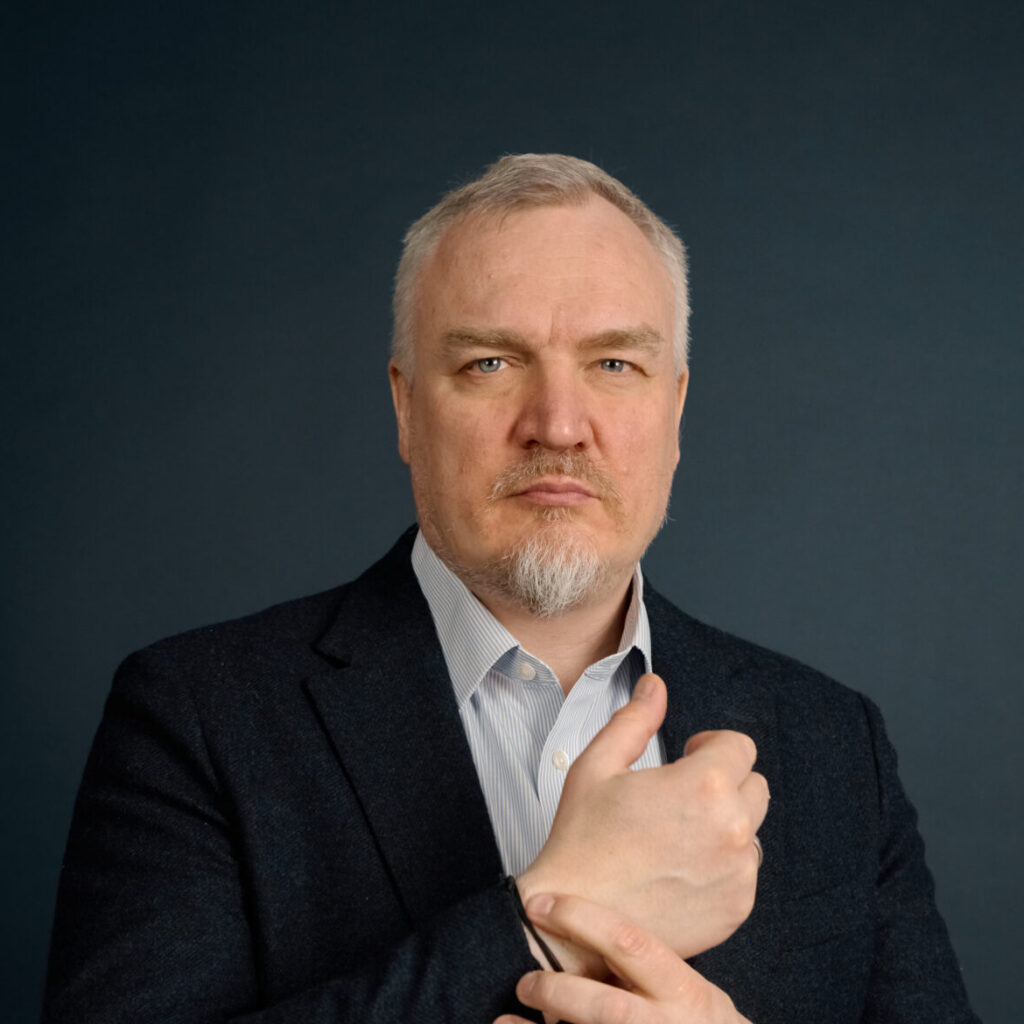
Pavel Luksha is a global expert in future skills, education, and systemic innovation. He founded Global Education Futures and co-founded the University for the Earth, shaping learning ecosystems in over 20 countries. Pavel developed the Rapid Foresight method and co-authored major reports like Peaceful Futures and Future Skills for the 2020s. He teaches futures thinking and leadership at institutions including SKOLKOVO and ESCP, and advises organizations like ILO, OECD, and WorldSkills. A frequent speaker and strategist, Pavel’s work connects regenerative education, peacebuilding, and planetary futures through interdisciplinary collaboration and policy innovation.
Leadership Education for the Regenerative Economy: Inspired by Nature
Regenerative economy is not just about fixing what is broken; it is a foundational paradigm shift that creates multitrillion-dollar opportunities across sectors, from food & energy, to finance and creative sectors. Management education must give leaders the tools to activate these opportunities and design for systemic value creation.
Regenerative business models change the nature of competition towards coopetition & alternative ways of value creation, including cooperative models (involving partner networks & customers in value creation in areas such as regenerative agriculture), business+movement building (in areas such as regenerative finance and regen AI solutions), and more broadly, businesses combining for-profit & non-profit activities for “net positive” effect. Additionally, from material standpoint, businesses need to constantly design processes & flows in circular & nature-friendly ways, often leveraging nature-based solutions. This is a different business philosophy that needs to combine business pragmatism with cultural transformation idealism.
Regenerative economy demands new leadership archetypes that traditional schools are not preparing for. Two most essential archetypes are ecosystemic gardeners and social weavers: intentional opportunity space cultivators and opportunity connectors.
Nature informs these leadership archetypes and business models: we learn from ways that natural ecosystems organize and steer themselves – leveraging decentralization & autonomy of participating agents while intentionally creating mutualistic relationships. Nature is not just a metaphor but a teacher of regeneration. Biomimicry, circular flows, and organic forms of governance can inspire both technology and the “soft infrastructure” of management thinking. Leaders must learn to read nature’s logics — and apply them to innovation, governance, and organizational design.